Closed eyes,
open hearts.
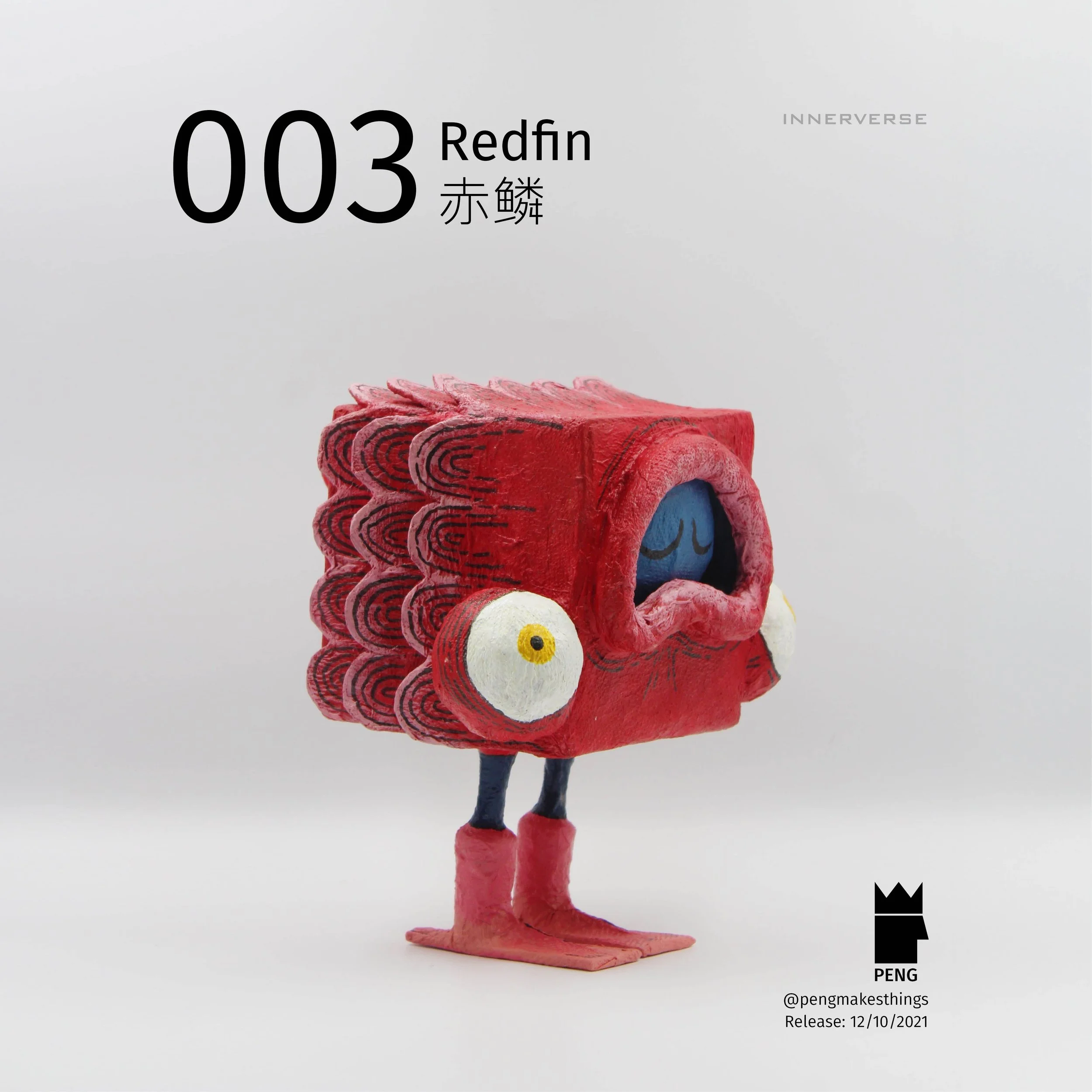
A fish-like form with a bold, playful exterior and a quiet inner presence. The outside feels slightly silly, with exaggerated features and rhythmic scales, while the inside remains calm and still.
Redfin plays with this contrast—an expressive outer shell wrapping around a peaceful core. The open mouth reveals the closed-eyes soul, as if the noise of the outside never fully reaches within.
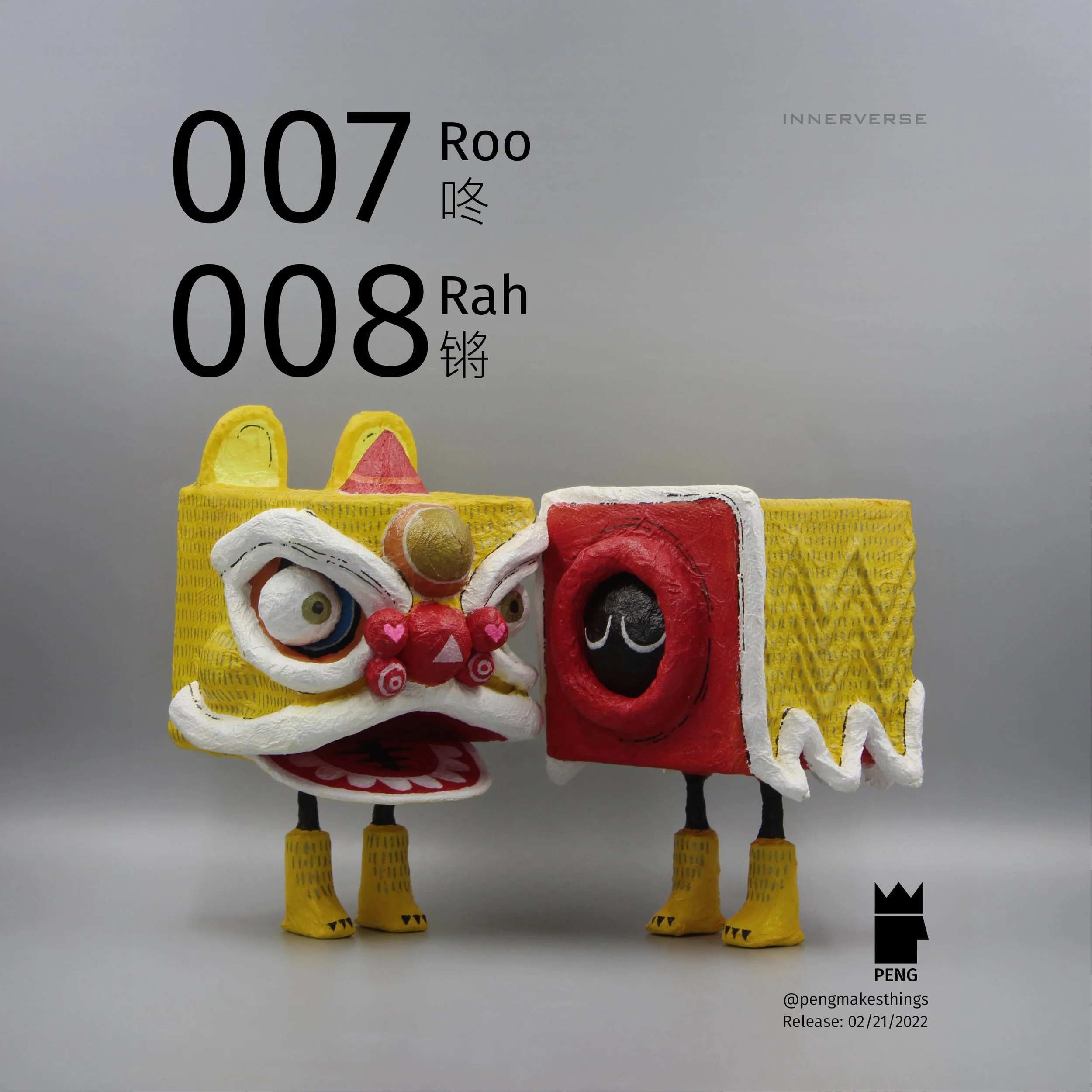
The first duo in the series, inspired by the lion dance from Lunar New Year traditions and connected to my cultural background.
Split into head and body, the two parts rely on each other to come alive. The front carries the expressive lion head with layered details and bold colors, while the back follows as the body, moving in sync. The cube forms are embedded within the costume, blending structure with performance. It’s about rhythm, coordination, and shared movement—two parts becoming one.
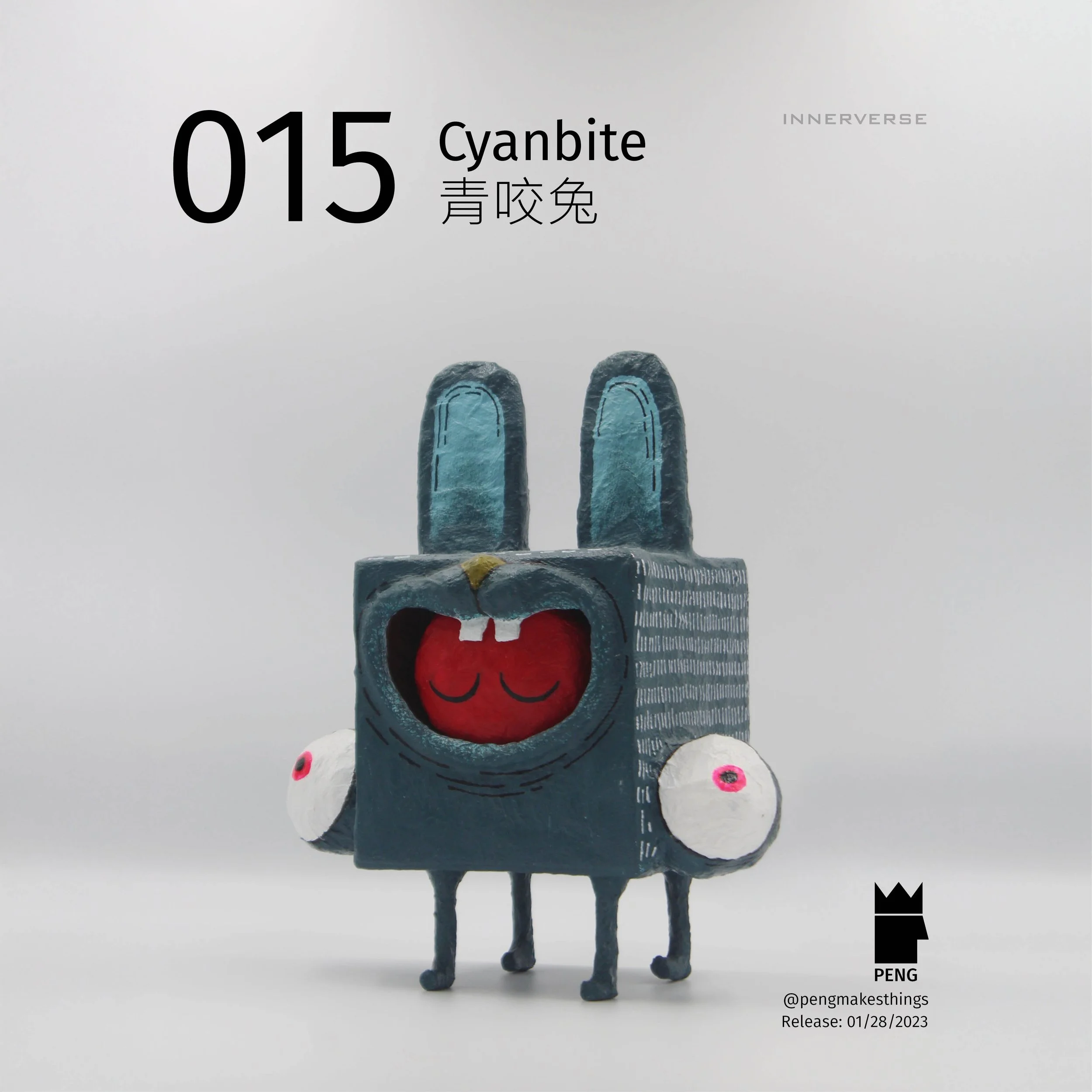
A compact cube with oversized ears, bold protruding eyes, and a big open mouth, giving Cyanbite a loud and playful presence. The exaggerated features break the rigid cube, making the form feel more animated and full of attitude.
This piece leans fully into personality rather than subtlety. Inspired by a silly, noisy rabbit, it feels energetic, a bit chaotic, and unapologetically expressive.
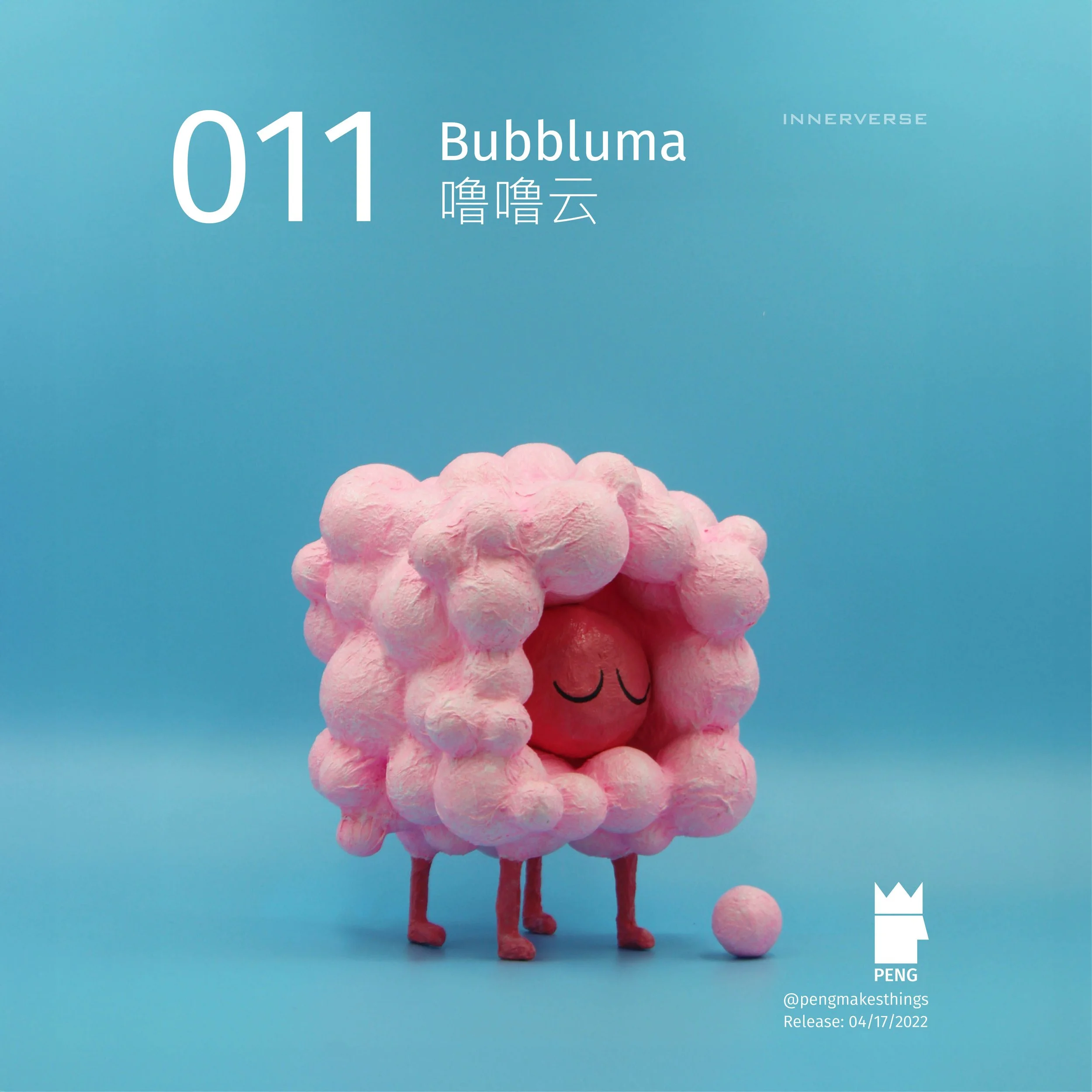
A softened cube, built from clustered bubble-like forms that gently expand outward, almost dissolving the edges of the original shape. The rounded volumes stack and press into each other, creating a cloud-like mass that feels light, soft, and slightly weightless.
Bubbluma explores a gentler deconstruction of the cube, focusing on comfort rather than tension. Inspired by the feeling of sleeping in on a Saturday morning, it suggests drifting above pink clouds—warm, quiet, and relaxed, like staying in a dream just a little longer.
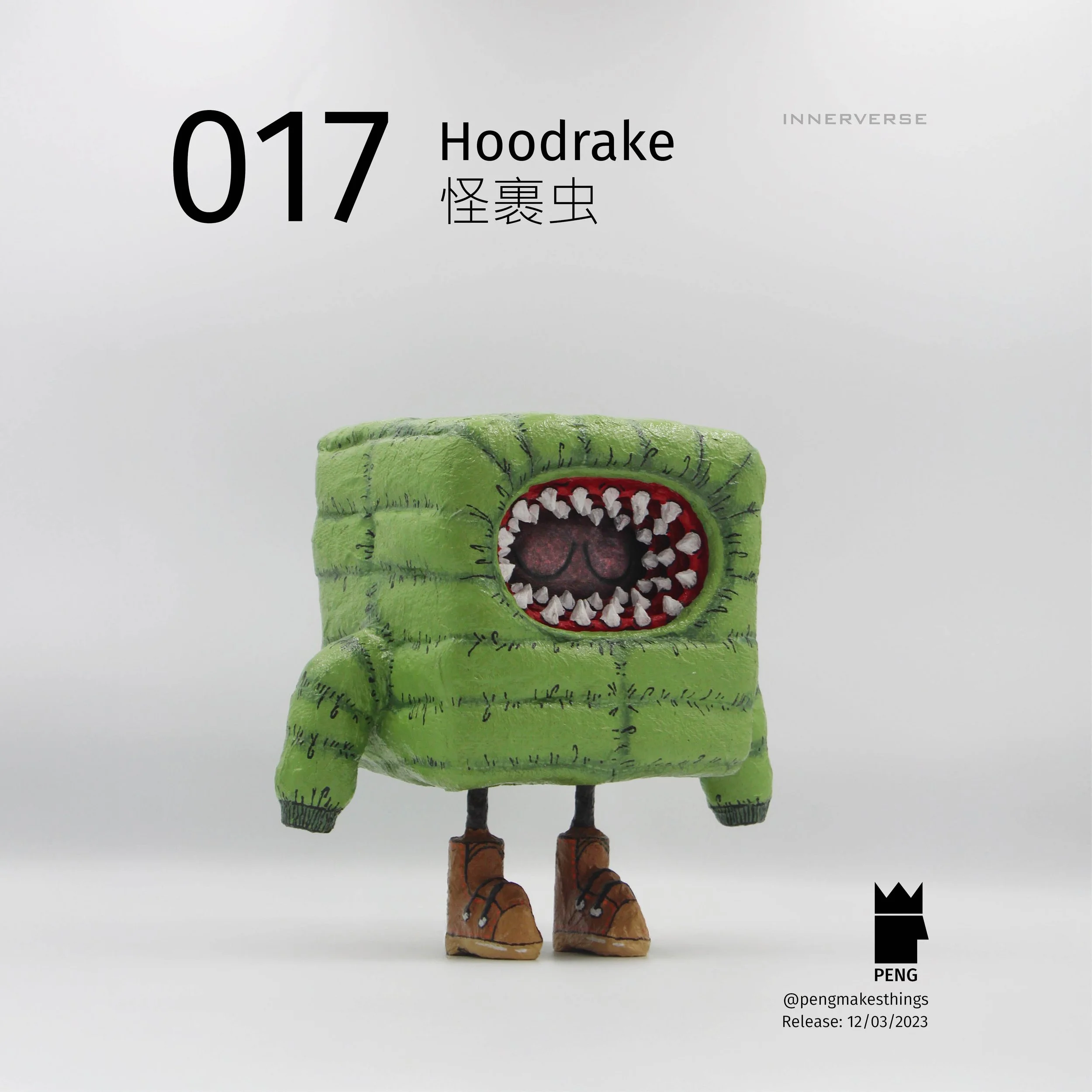
A padded cube that sits between a puffer jacket and a worm-like creature. The stitched, segmented surface suggests something soft and wearable, while the overall form feels alive and slightly unsettling.
Hoodrake plays with that confusion—comfort versus discomfort, clothing versus creature. The open mouth cuts through the soft exterior, revealing something more visceral inside. It feels familiar at first, then slowly shifts into something harder to place.
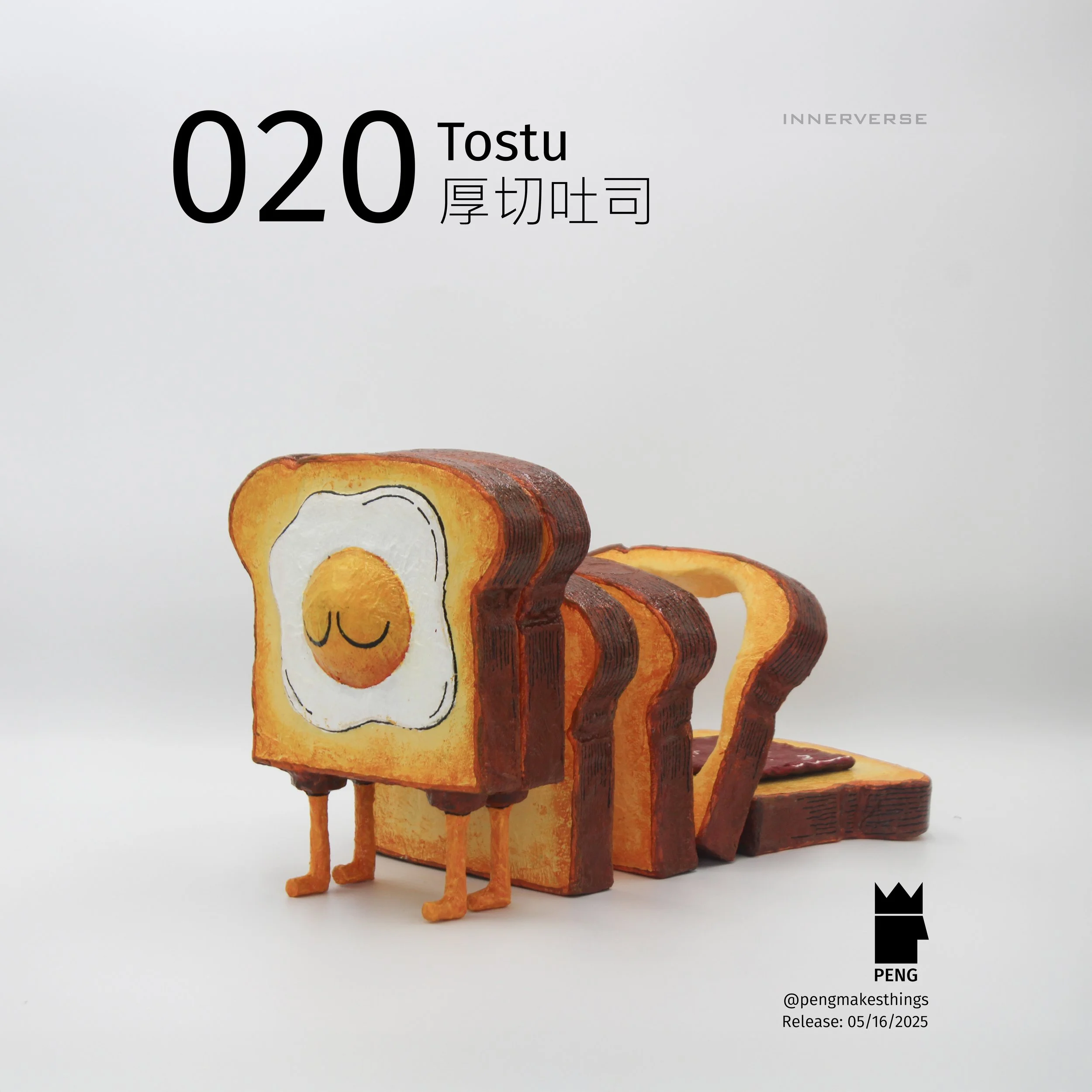
A stack of toast slices forming a soft, layered cube, with each piece able to shift, detach, and reassemble. Hidden magnets allow the slices to reorganize into different configurations, turning the form into something flexible and changeable.
Tostu plays with modularity and everyday familiarity. The warm, simple form feels comforting, while the ability to rearrange introduces movement and variation. It’s less fixed than it looks—always able to become something slightly new.
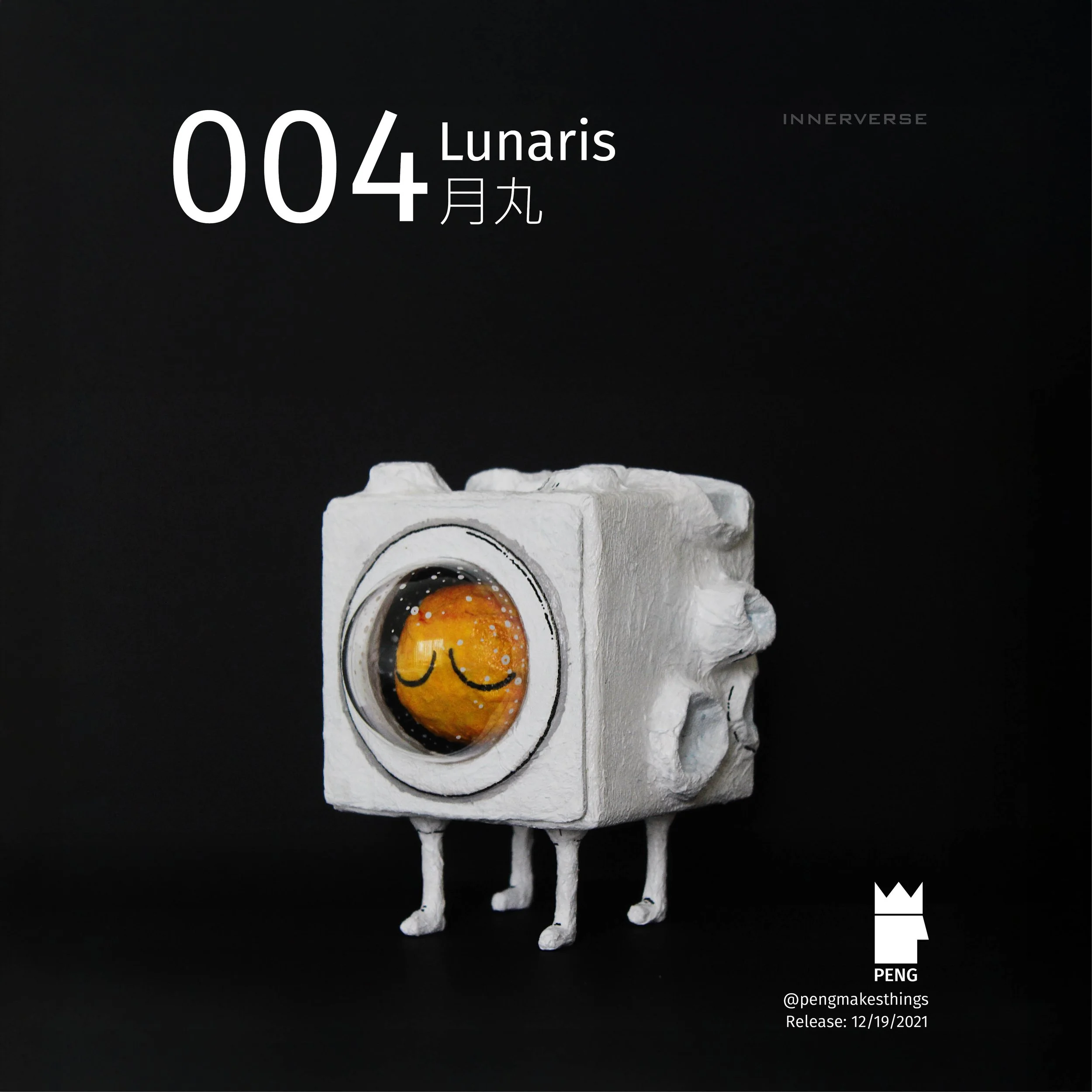
A quiet, solitary form holding its own small universe inside. The outer shell is marked with ringed craters, like the moon’s surface—textured, worn, and quietly enduring. Inside the dome, a soft glow reveals faint stars, held within its own space.
Lunaris is about being alone without fear. Calm, steady, and self-contained, it drifts with quiet confidence. The stars are not far away but gathered inside, like a universe turned inward—carrying its own light through the silence.
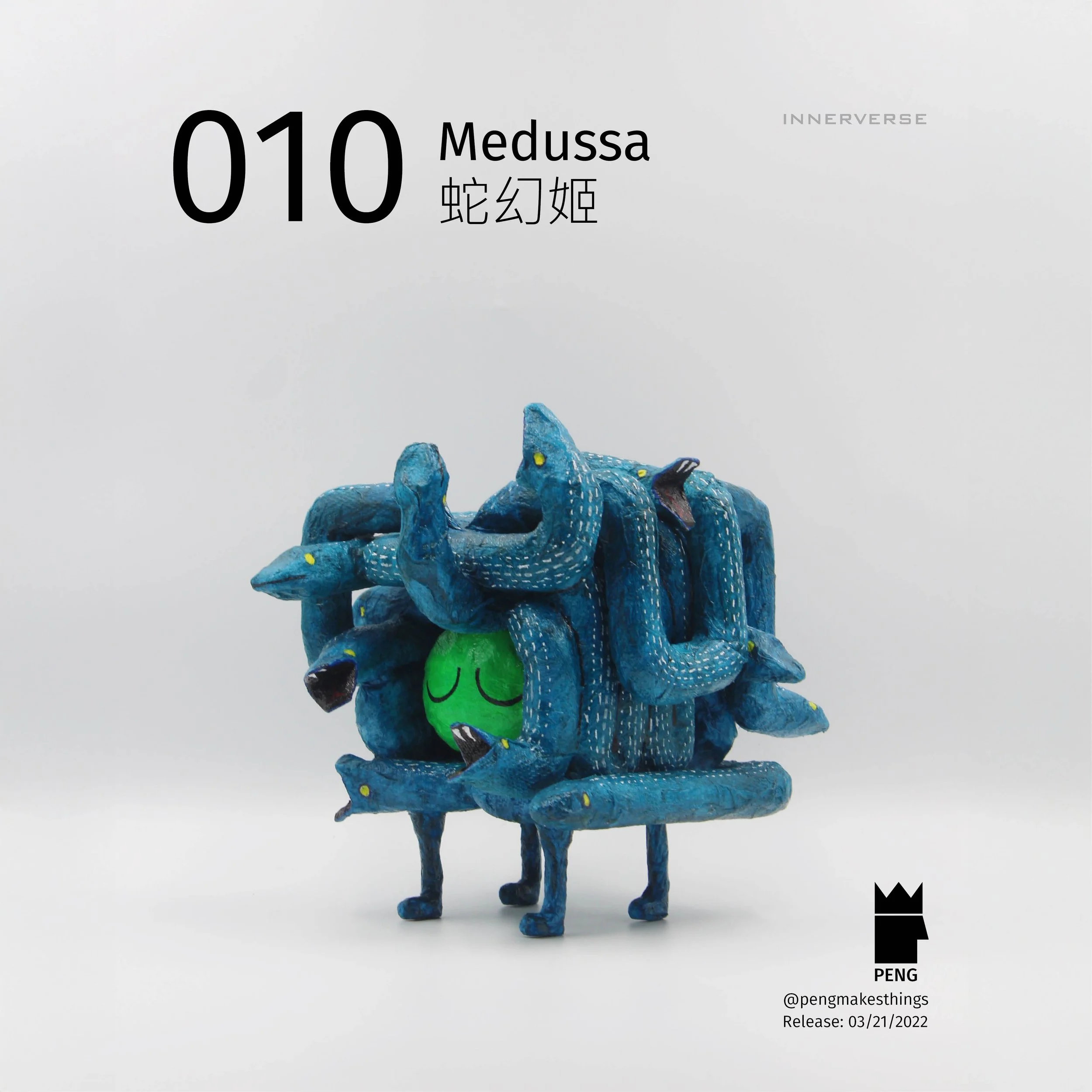
A deconstructed cube, broken into snake-like strands that wrap and weave back into a loose cube form. From afar it still holds its volume, but up close it unravels into something more fluid and unpredictable.
Inspired by Medusa from Greek mythology, the piece carries a sense of mystery, with tangled forms that both conceal and reveal. It’s a study in spatial thinking—taking the cube apart and reforming it through layering, overlap, and movement, while still holding its overall shape.
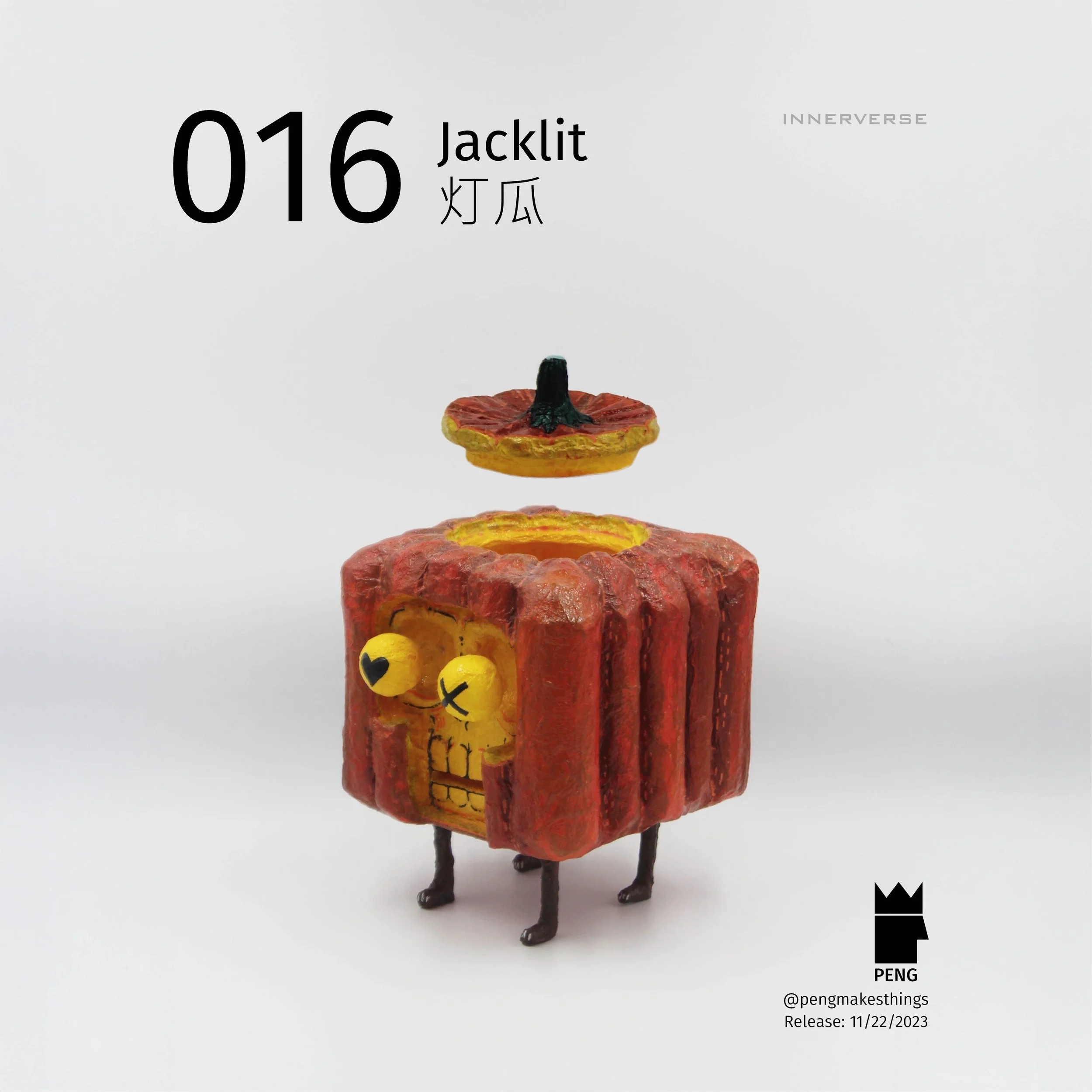
A cube inspired by a Halloween pumpkin carving, with a carved exterior and a removable top. The surface carries the rough, hand-made texture of a carved pumpkin, while the face on the outside feels playful and slightly eerie.
What sets Jacklit apart is how the inner soul is fully hidden within the cube. The closed-eyes face isn’t visible unless the lid is lifted, turning the piece into something interactive—revealed only through action. It shifts the focus from seeing to discovering, like uncovering something quietly held inside.
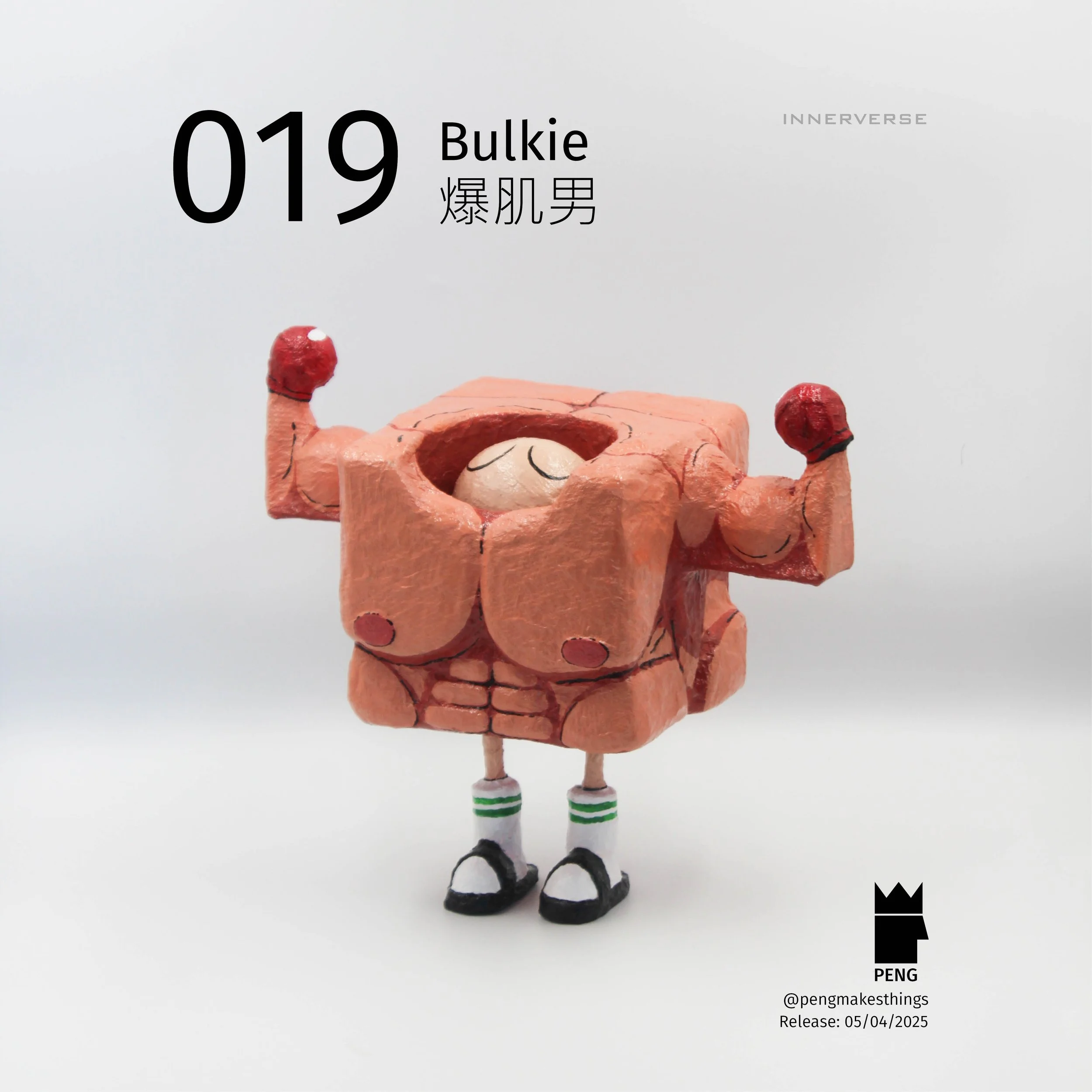
A small inner figure wearing an oversized muscular body like a costume. The exaggerated chest and arms feel slightly too big, like something being tried on. Below, simple legs in slippers keep it grounded and casual.
Bulkie comes from imagining an ideal, sculpted body while living a more relaxed, everyday life. It’s about wanting it, but not letting it take over—finding a balance between effort and ease. The strength is there as a vision, but so is the choice to enjoy life without pushing too hard.
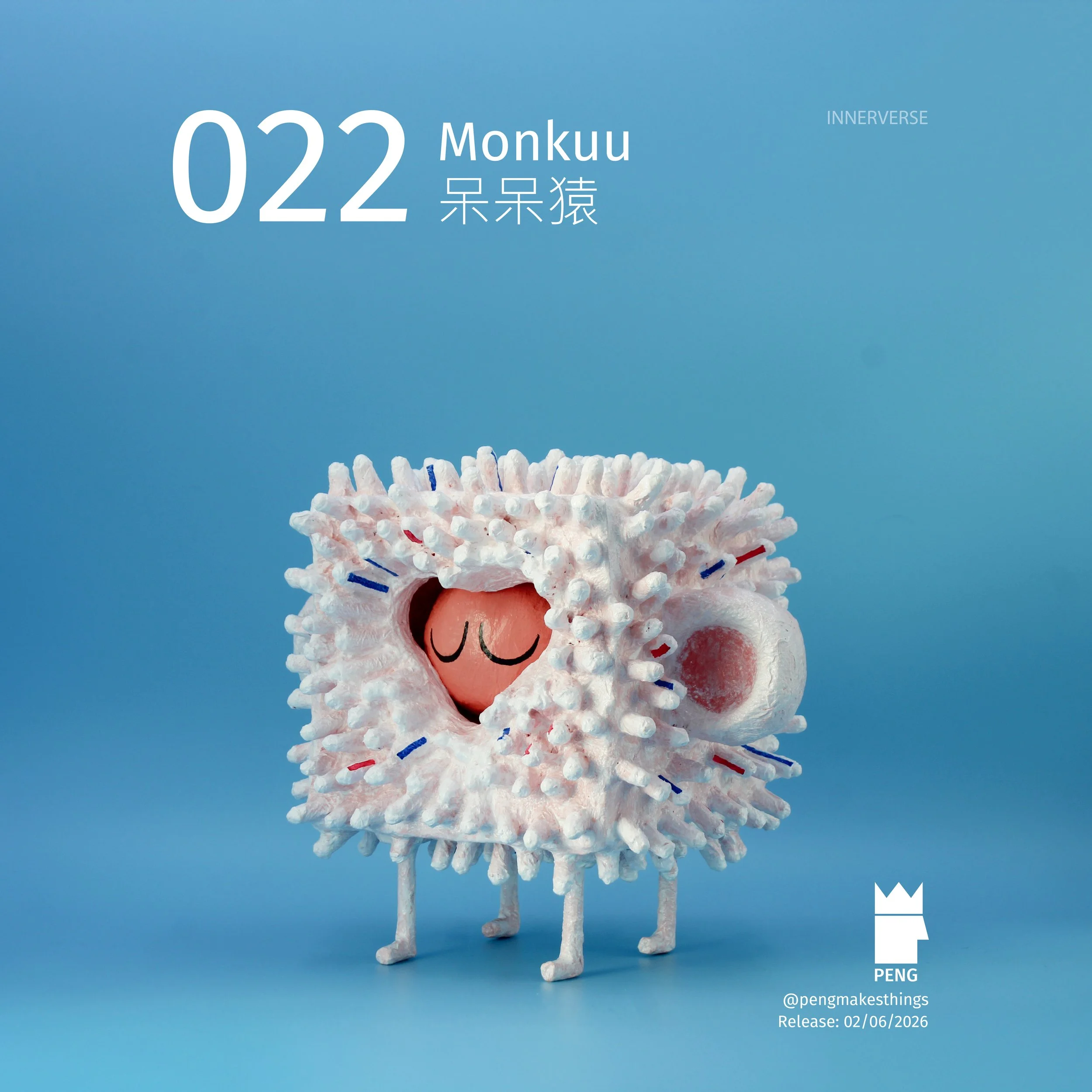
A cube covered in dense, fur-like spikes, softening the edges into a warm, textured form. The surface feels thick and insulating, like a winter coat built to hold in heat, with a subtle rounded backside detail that adds a bit of quiet humor.
Inspired by Japanese snow monkeys, Monkuu carries a calm, grounded presence. The outer layer feels wild and natural, while the inner face rests peacefully within. It suggests warmth in cold conditions—still, steady, and completely at ease.
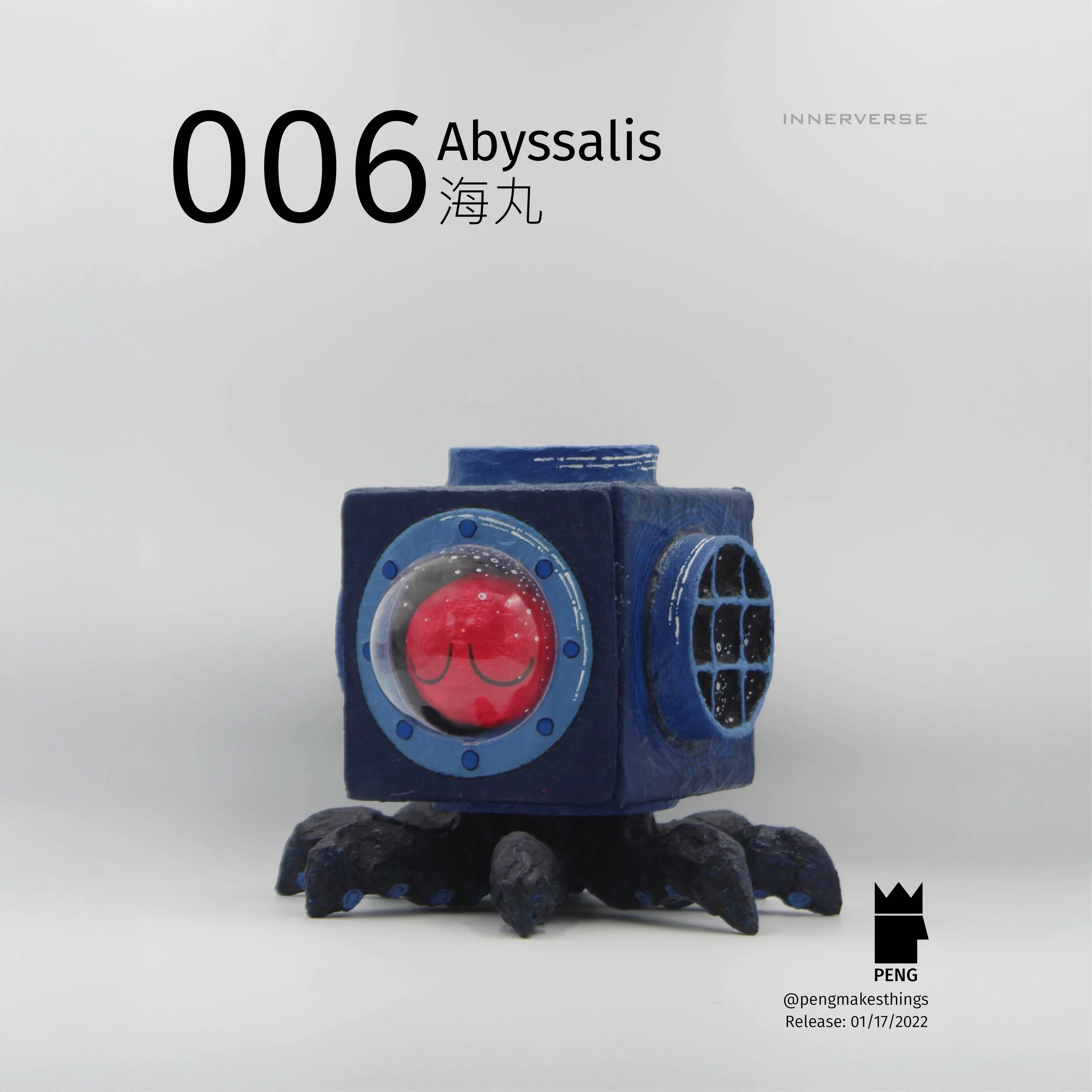
A darker sibling to Lunaris, shifting from space into the deep ocean. The cube reads as an aquanaut helmet—sealed, pressurized, with round windows and bolted edges, built to withstand depth.
Deep blue layers and a worn texture give it an aged, underwater feel. Below, short octopus-like tentacles with subtle suction details spread outward, low and grounded, contrasting the rigid shell above. Inside, the same calm soul glows. It may feel darker, but not evil—just shaped by depth.
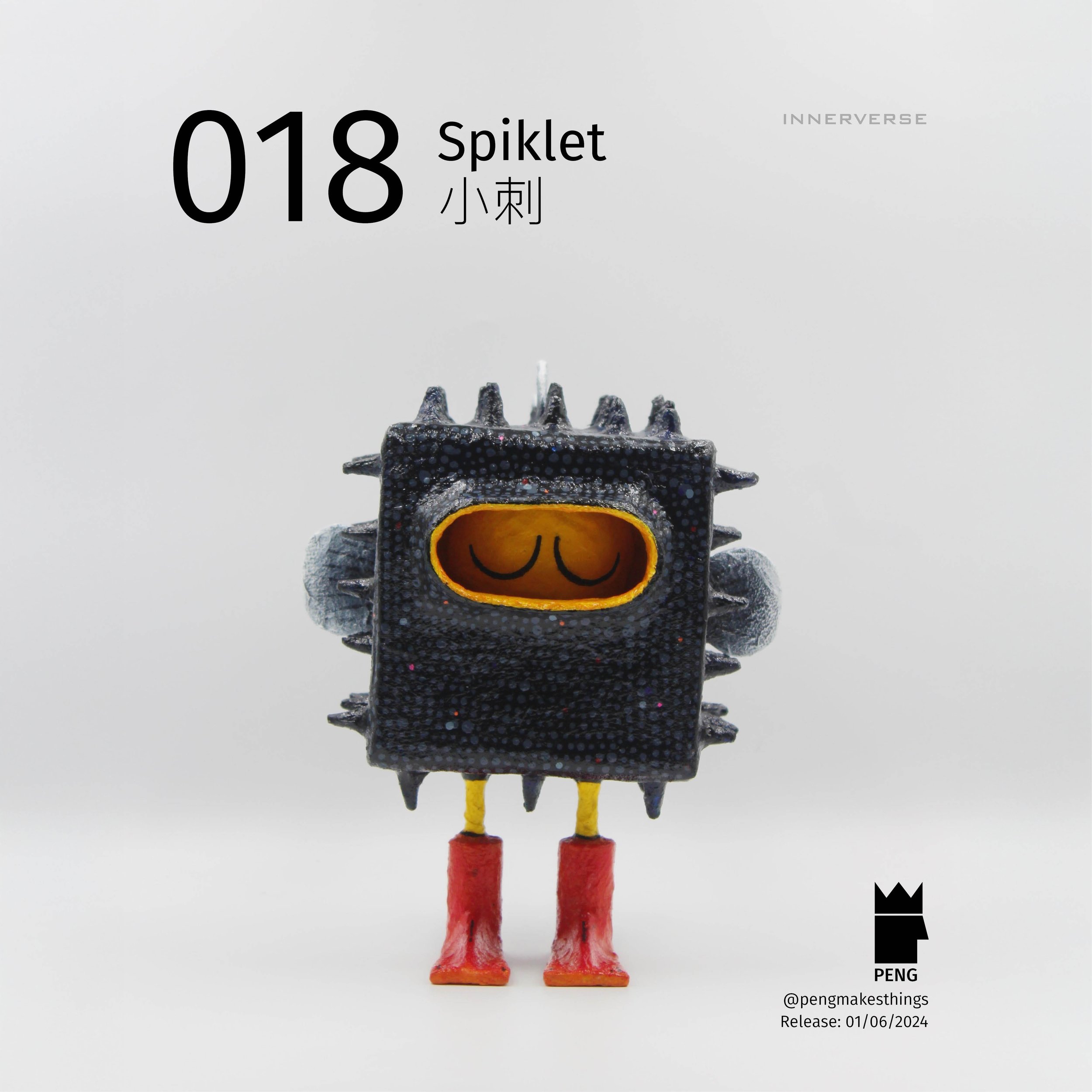
A compact cube inspired by a puffer fish, covered in small spikes that form a protective outer shell. Dark at first glance, but scattered with tiny colored dots across the surface—subtle, almost hidden details that reveal themselves slowly.
Spiklet feels guarded, not aggressive. The shell keeps distance, while the presence inside stays quiet and calm. There’s something special there, but it doesn’t try to stand out or be loud about it—you just have to take a bit of time to notice.
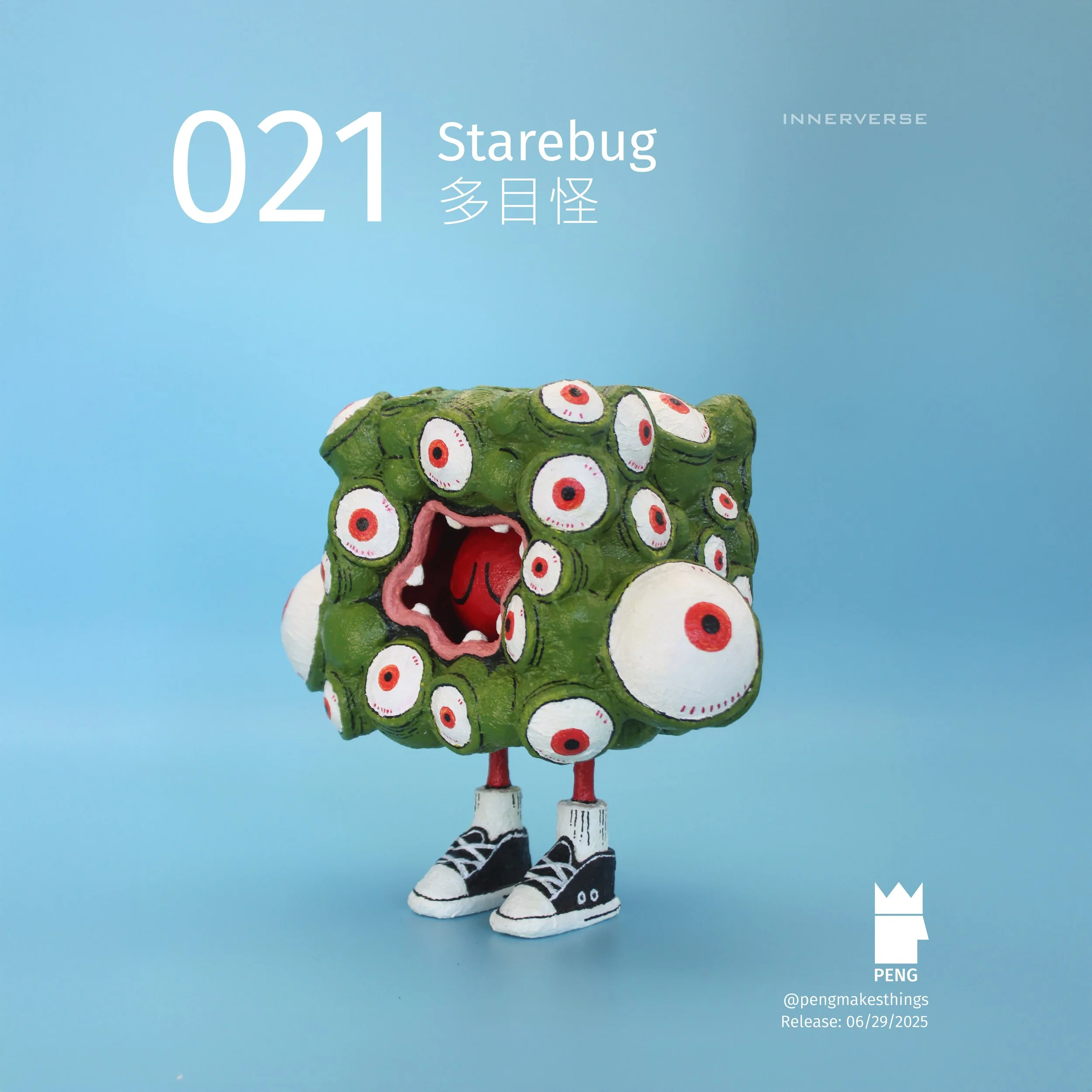
A deconstructed cube, broken into a clustered surface of many open eyes that wrap and bulge outward. The form feels irregular and dense, pushing beyond the original geometry into something more organic and unsettling.
Starebug leans into form play and discomfort. It’s a bit scary at first—too many eyes, too much presence—yet at the center, one pair stays closed. Surrounded by constant watching, it holds onto its own quiet space.
